News

U.S. Air Force Logo United States Air Force

AFIMSC celebrates 8 years of global I&MS support

  • Published April 6, 2023
  • By Breanne Humphreys & Emily Mifsud
  • AFIMSC Public Affairs

JOINT BASE SAN ANTONIO-LACKLAND, Texas – According to tradition, bronze is the go-to gift for celebrating an eighth anniversary; bronze combines copper, tin and other metals to create a stronger, more resilient material.

Eight years ago, on April 6, 2015, the Air Force activated the Air Force Installation and Mission Support Center, one of six specialized centers assigned to Air Force Materiel Command. With a mission to deliver globally integrated installation and mission support, AFIMSC combined the strengths, skills and expertise of six field operating agencies, major command, and headquarters Air Force I&MS functions under one roof. This created a stronger, more resilient support model to accelerate change and revolutionize combat power and installation support for the Department of the Air Force.

Today, AFIMSC executes an annual budget of more than $10 billion to deliver globally integrated I&MS services across 150 capabilities and nine major mission areas: Airmen and Family Services, Base Communications, Chaplain Programs, Civil Engineering, Financial Management, Logistics Readiness, Operational Acquisition, Public Affairs and Security Forces.  

As AFIMSC celebrates its eighth anniversary, here are eight significant contributions the AFIMSC team has made to accelerate change and deliver the next generation of capabilities the Air Force needs to fly, fight and win: 

  1. Infrastructure modernization, disaster recovery and new mission beddown 
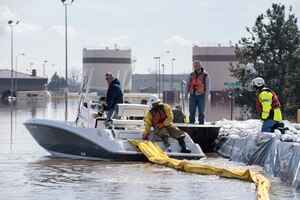
    Environmental restoration employees deploy a containment boom from a boat March 18, 2019, on Offutt Air Force Base. One-third of the installation was flooded and the boom was a precautionary measure for possible fuel leaks.  (U.S. Air Force photo by Delanie Stafford)

    Environmental restoration employees deploy a containment boom from a boat March 18, 2019, on Offutt Air Force Base. One-third of the installation was flooded and the boom was a precautionary measure for possible fuel leaks. (U.S. Air Force photo by Delanie Stafford)

    Photo Details / Download Hi-Res

    AFIMSC provides full-spectrum installation support services to help the Department of the Air Force modernize infrastructure, recover from catastrophic natural disasters and beddown new weapon systems like the KC-46A, B-21, T-7A and MH-139A.
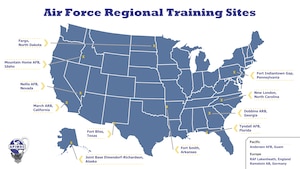
map of Air Force Regional Training Sites

A working group including representatives from AFIMSC, Air Force Civil Engineer Center, Air Force Security Forces Center and the Headquarters Air Force Civil Engineer Readiness Division solidified 14 locations to serve as Air Force Regional Training Sites for the installation and mission support community. The team will be conducting site surveys over the next several months to identify requirements for expanding each site’s operational capabilities. (U.S. Air Force graphic by Jim Martinez)

Photo Details / Download Hi-Res

  1. Prioritize Airmen readiness 
    From fully equipped, multi-functional training sites, to helping installation leaders integrate Air Base command and control, AFIMSC provides the resources, expertise and support I&MS Airmen need to maintain effective power projection platforms.
  1. Data analytics and IHA 
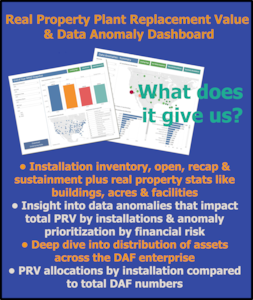
    A data analytics team with the Air Force Installation and Mission Support Center is refining the analytics tools that help Air Force leaders.

    A data analytics team with the Air Force Installation and Mission Support Center are refining the tools to assist Air Force leaders prioritize their most critical mission support areas and determine funding requirements. The data scientists collect, store and analyze an immense amount of data from across the Department of the Air Force to support to AFIMSC’s directorates and enterprise managers and work special projects in areas of varying duration. (Air Force Graphic)

    Photo Details / Download Hi-Res

    AFIMSC’s Analytics Team is helping Air Force leaders prioritize their most critical mission support areas and determine funding requirements. The Installation Health Assessment tool uses Air Force-wide civil engineering data to provide holistic site pictures and assess performance in many areas to effectively manage installations.
Senior Airman Kiah C. Cook, 377th Security Forces Group defender, donns her body armor at Kirtland Air Force Base, N.M., Feb. 4, 2021. Airmen from the 377th SFG were among the first Air Force defenders to receive the new issue of female body armor starting January 2021.

Senior Airman Kiah C. Cook, 377th Security Forces Group defender, donns her body armor at Kirtland Air Force Base, N.M., Feb. 4, 2021. Airmen from the 377th SFG were among the first Air Force defenders to receive the new issue of female body armor starting January 2021. (U.S. Air Force photo by Airman 1st Class Ireland Summers)

Photo Details / Download Hi-Res

  1. Initiatives to modernize Total Force Defenders 
    The Air Force Security Forces Center equips more than 38,000 security forces members across the Total Force delivering the latest, technically advanced personal gear and equipment to security forces around the world. Some include high-speed ballistic helmets, female body armor and modular scalable vests to give Defenders every advantage over their adversaries.
  1. Improved housing for Airmen, Guardians and their families 
    group of people by building

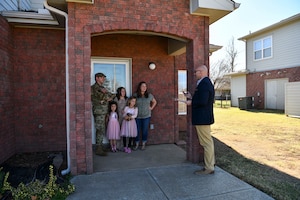
    Brian Bush, right, 97th Air Mobility Wing privatized housing resident advocate, speaks with a family about what his position can do for members of the 97th Air Mobility Wing, Nov. 25, 2020, at Altus Air Force Base, Oklahoma. The job of an installation resident advocate is to have a proactive approach to ensure military members and their families’ concerns with privatized housing are addressed and elevated to the appropriate levels within the chain of command. (U.S. Air Force photo by Senior Airman Dallin Wrye)

    Photo Details / Download Hi-Res

    The Air Force Civil Engineer Center launched a housing improvement initiative to address the challenges of privatized military housing programs by implementing critical process changes including standardizing the work order system, enacting a Tenant Bill of Rights and hiring resident advocates to address concerns with Air Force leadership.
graphic detailing Aviano cost savings

The work of the 31st Contracting Squadron at Aviano Air Base, Italy, contributed the Cost Savings Tracker entry that put the Department of the Air Force over the $3 billion cost savings milestone. The squadron's $70.8 million cost savings was the result of a Viper kits contract that not only helped solve a mission problem but led to decentralized ordering as well. (U.S. Air Force graphic illustration).

Photo Details / Download Hi-Res

  1. DAF $3 billion cost savings 
    The Air Force Installation Contracting Center developed a SharePoint-based data tool that tracks budgetary savings and cost avoidance. In 2022, the CST achieved a major milestone, netting the Air Force $3 billion in cost savings from thousands of acquisitions tracked in the tool.
  1. Innovative solutions to I&MS challenges 
    Finalists group photo

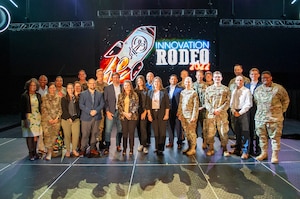
    The finalists for the 2022 Innovation Rodeo and Air Force Installation and Mission Support Center Ventures pose for a group photo Aug. 19, 2022. Now in its fourth year, the annual event has grown into a collaborative effort that brings together partners and innovation leaders from across the Department of Defense. (U.S. Air Force photo by Craig Z. Rodarte)

    Photo Details / Download Hi-Res

    From hosting major events like Innovation Rodeo and I-WEPTAC, to partnering with industry and the Small Business Administration, AFIMSC helps decision makers at headquarters and the bases build partnerships with industry and Airmen/Guardian innovators, navigate the innovation ecosystem and provide funding and program support.

Food 2.0 brings healthier dining options to Seymour-Johnson

Seymour-Johnson Air Force Base, North Carolina, is the latest installation to implement the Food 2.0 initiative to offer healthier options to customers with the reopening of two renovated dining facilities on 29 Oct. The Food 2.0 style of service gives patrons at Seymour-Johnson and other installations “finish in front” service stations, technology advancements, and robust self-serve breakfast yogurt, salad bar and “grab & go” meal and snack options. The Air Force Services Center manages the program across the Air Force. (Courtesy Photo)

Photo Details / Download Hi-Res

  1. Food Service Transformation 
    The Air Force Services Center is providing healthy and nutritious food options to ensure a more ready force with programs like Go4Green, Air Force Smart Fueling Initiative and Food 2.0 to enhance the wellbeing of service members and their families.
AFIMSC anniversary AFMC Air Force Space Force Airmen and Family Readiness base communication chaplain programs civil engineering financial management logisitics readiness operational acquisition Public Affairs security forces
Department of the Air Force Logo